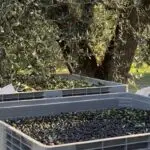
From the history of the olive tree to the production of new oil: a Year 5 primary school class visited Oleificio Corazza in Rimini during the 2026 harvest season, discovering first-hand how olives become extra virgin olive oil.
There are mornings when our olive mill fills with something more than usual. Alongside the noise of the machines, the scent of freshly milled olives and the comings and goings that come with every new harvest, there are lots of questions, curious eyes and infectious enthusiasm.
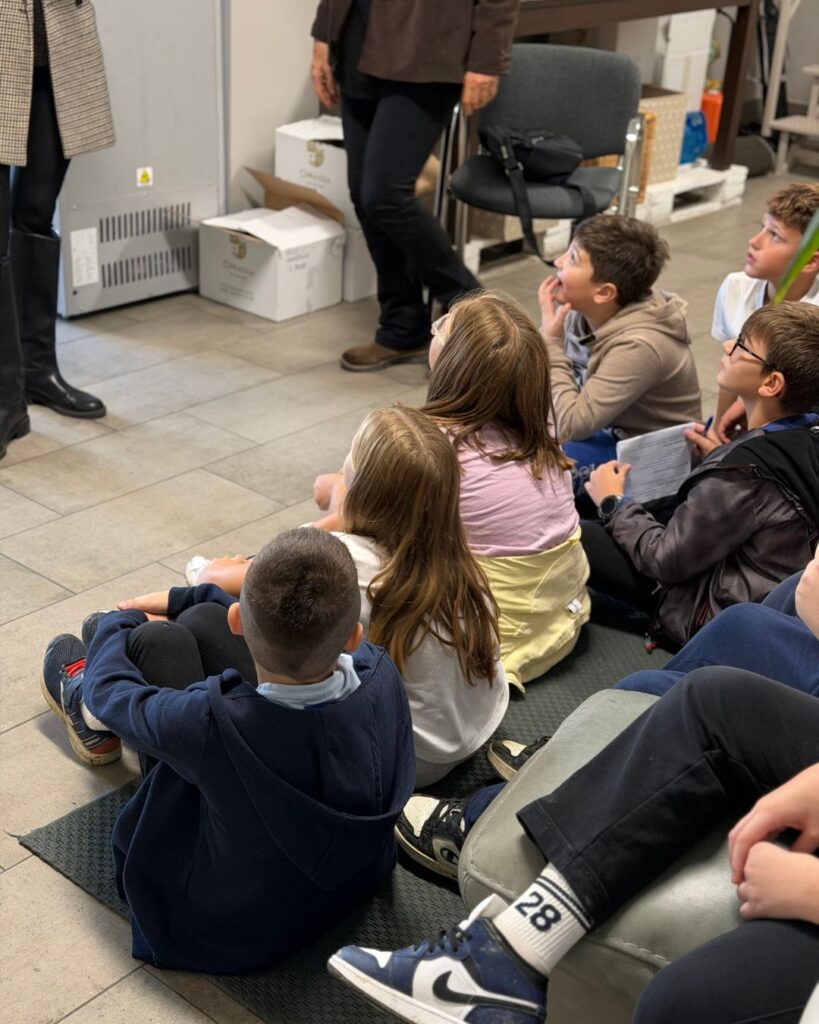
That’s what happened on 20 October 2026, when we welcomed a Year 5 primary school class to our olive mill in Rimini, ready to discover how extra virgin olive oil is made. And they couldn’t have picked a better time.
The 2026/2027 harvest season had begun just a few weeks earlier and the mill was in full swing: olives arriving, machines running and the new oil finally starting to flow.
For the children it was a chance to see live a process they often only know from books. For us, it was a precious opportunity to share our family’s story and work.
We wanted to welcome our young guests with something special: a welcome letter written just for them. Not a lesson full of difficult words, but a simple story to guide them as they discovered what they would see during the visit.
We started in 1959, the year our family’s story in the world of olive oil began, explaining how the mill has changed over time, through new generations and new technologies. We also talked about Giuseppe Corazza (Pino) and the people who carry on this business every day.
Then we took a small step back. Because before the mill, the machines and the oil, there is a protagonist that deserves to be known: the olive tree.
How do you explain to a child where olive oil comes from?
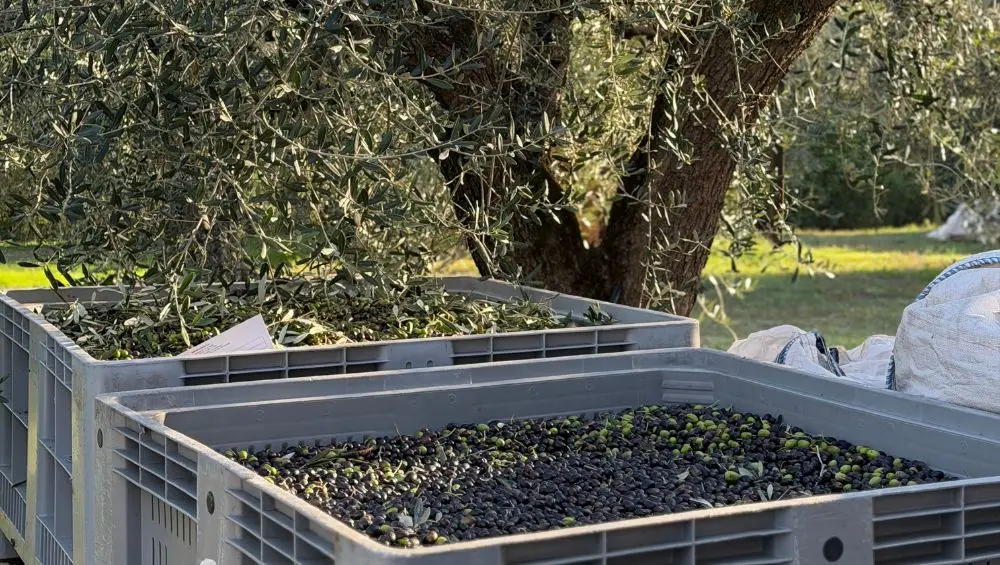
We chose to start with the tree. The olive tree is an extraordinary plant that can live for hundreds of years, and in some cases even more than a thousand. Its trunk can grow large and twisted over time, its leaves are green on top and silvery underneath, and its ability to adapt makes it one of the symbols of the Mediterranean landscape.
Above all, it has a rhythm all of its own. In spring small flowers appear, and when they are pollinated and the fruit develops, they can turn into olives.
During the summer the fruit grows and slowly begins to ripen. Then autumn arrives, the time when the harvest begins. This is exactly where the work in the olive groves meets the work of the mill.
And for our Corazza family, every October marks a new beginning.
How is extra virgin olive oil made? The children found out first-hand
After the introduction came the moment everyone had been waiting for: stepping into the heart of the mill and watching the different stages of processing. With the machines running and the olives from the new harvest, the children were able to follow some of the key steps that turn a small fruit into extra virgin olive oil.
1. Cleaning and washing the olives
The first step they watched was the cleaning of the olives. When they arrive at the mill, they may come with leaves, small twigs and other debris picked up in the olive groves.
Special machines separate them from these foreign materials and then wash them. It’s an important stage because it prepares the olives for the steps that follow.
2. Crushing: from olives to olive paste
After washing, the olives are crushed in a machine called a crusher. This is where the fruit completely changes appearance: the flesh, skin and stone are reduced to a paste.
We described this transformation to the children before taking them to the next stage, which they could see during the visit.
3. Malaxation: when the tiny drops of oil come together
One of the most interesting moments was watching the malaxation. The paste from the crushing is slowly mixed inside a machine called a malaxer. This movement helps the tiny drops of oil in the paste to join together, preparing it for separation.
The children were fascinated to see how olives that had been perfectly recognisable just moments before had turned into something completely different.
4. Extraction: here comes the new oil!
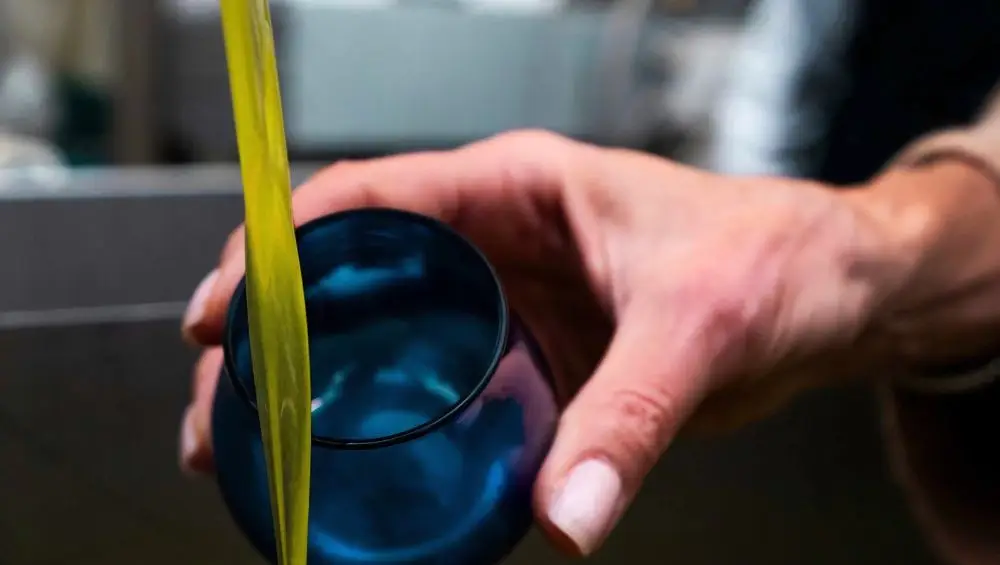
And here is the moment that most caught our guests’ attention: seeing freshly extracted oil flowing out of the machine, right before their eyes.
After malaxation, the oil is separated from the other components of the olive paste by mechanical systems. What only a few hours earlier was inside small fruits picked from the trees finally becomes oil.
And that is the beauty of visiting an olive mill during the harvest season: you can watch the transformation as it really happens.
Before the visit began, we gave the children a special mission.
Three simple things to discover along the way:
- What does a working olive mill smell like?
- How do the olives change in appearance during processing?
- What colour is freshly made oil?
Simple questions, but ones that turned the visit into an experience of observation and discovery: learning to recognise the aromas of the oil, watching its transformations and understanding how much work lies behind what reaches our tables every day.
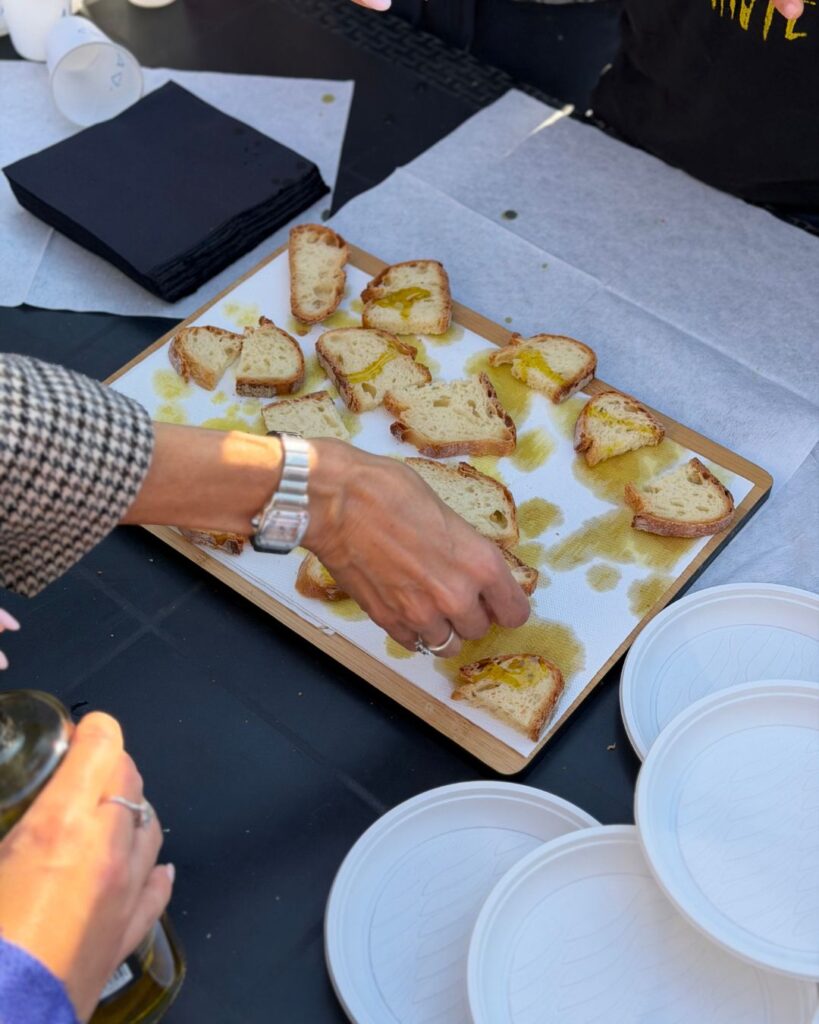
Tasting the new oil: a slice of bread to end the visit
After following the olives’ journey, we could only end the morning in our favourite way.
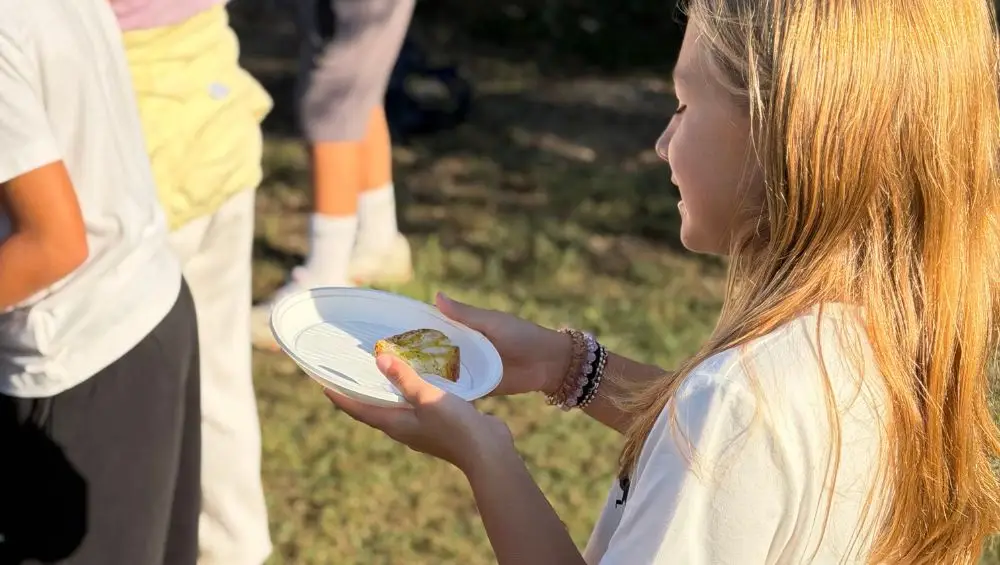
With a slice of bread and our freshly made extra virgin olive oil.
A simple gesture, but the perfect way to connect everything the children had just seen with the taste of the oil.
We explained that a fresh extra virgin olive oil can have green, vegetal aromas and bitter and peppery sensations, qualities that should not necessarily be considered defects.
Every oil has its own sensory profile, which depends on several factors, including the olive variety, ripeness and how it is processed.
And so, after hearing the noise of the machines, looking at the olive paste and seeing the new oil flow, it was finally time to taste it.
Why visit an olive mill with a primary school class?
An educational visit to an olive mill lets children get a close-up look at an agricultural and production activity rooted in the local area.
By observing directly, they can discover where an everyday food comes from, understand the seasonal cycle of the olive tree and see how raw materials are transformed.
It’s an experience that can link to many school subjects: science, food education, history, geography and environmental education.
But there’s also something that goes beyond the educational side.
Visiting an olive mill means meeting the people behind a product, hearing their story and discovering that what we eat every day has a precise origin.
For us it’s important to help pass on this awareness to the younger generations too.
Frequently asked questions about school visits to the olive mill
What can children learn during a visit to an olive mill?
They can learn about the life cycle of the olive tree, the olive harvest and the main stages of extra virgin olive oil production, from cleaning the fruit to extraction. A visit during the harvest season also lets them see the machines at work.
When are olives harvested in Emilia-Romagna?
In Emilia-Romagna the olive harvest generally takes place in autumn, with timing that varies according to the area, the variety and the weather. At Oleificio Corazza we began the 2026/2027 harvest season in early October.
When is the best time to see an olive mill at work?
The harvest season, generally in autumn, is when you can see the olives being processed. Dates and access, however, depend on the activity and organisation of each mill.
Does Oleificio Corazza organise school visits?
At Oleificio Corazza we welcomed a Year 5 primary school class during the 2026 harvest season, offering a journey through our family history and the processing of the olives. Any new school visits must be arranged directly with the mill, depending on availability and operating conditions.